Why most Типография projects fail (and how yours won't)
Why 73% of Print Shop Projects Miss Their Deadlines (And How to Beat the Odds)
Last month, a wedding planner in Boston called me in tears. Her invitations were supposed to arrive three weeks before the ceremony. They showed up four days after the wedding. The print shop blamed "unexpected complications." The reality? This disaster was 100% predictable.
Here's the uncomfortable truth: most typography and print projects don't just fail—they spectacularly implode. Budgets balloon by 40-60%. Deadlines slip by weeks. The final product looks nothing like what you approved. And everyone points fingers while your launch date whooshes past.
I've watched this train wreck happen hundreds of times over fifteen years in the printing industry. The pattern is always the same.
The Real Reason Print Projects Go Sideways
Most people think print projects fail because of technical mistakes. Wrong fonts, color mismatches, paper stock issues. Sure, those happen. But they're symptoms, not the disease.
The actual killer? Nobody establishes a shared language in the first 48 hours.
Your designer says "ivory" and means Pantone 7499. The print shop hears "ivory" and thinks about the creamy stock they got on sale last Tuesday. You're imagining your wedding invitation looking like that $12 card you bought at a boutique. Spoiler: that card was letterpress printed on 110lb cotton paper with two spot colors and edge painting. Your quote is for digital printing on 80lb cover stock.
Three weeks later, you get samples that look completely wrong. Now you're starting over with 18 days until your deadline.
The File Format Nightmare
Here's another landmine: 64% of project delays stem from file preparation issues. Your designer sends a PDF. Looks perfect on screen. The print shop opens it and half the fonts are missing because they weren't embedded. The blacks aren't rich black (C:60 M:40 Y:40 K:100)—they're just K:100, which prints as dark gray.
The print shop should catch this. But they're running 47 jobs this week, and yours just became number 48.
Warning Signs Your Project Is Already Doomed
You can spot a failing project before you even place the order:
- The quote arrives in under 2 hours – Nobody asked about paper weight, finish, binding method, or how you'll use the final product. They just plugged numbers into a calculator.
- You haven't seen physical samples – That photo on their website? Could be from 2015. Could be someone else's work. Paper and ink look completely different in person.
- There's no revision timeline – "We'll send proofs" means nothing. When? How many rounds? What's the approval process?
- The deposit is under 30% – Legitimate shops need 50% upfront for custom work. Low deposits mean they're desperate for jobs or planning to cut corners.
The Five-Step Fix That Actually Works
Step 1: The 30-Minute Alignment Call (Before Any Files Change Hands)
Get on the phone. Not email—phone. Bring your designer if you're using one. Ask the print shop to describe your project back to you. Where's the disconnect? Fix it now, not after the first proof.
Share reference images. Not vague Pinterest boards—actual printed pieces you can mail to them. "Make it look like this" beats 10,000 words about "elegant but modern."
Step 2: Demand a Physical Proof for Orders Over $500
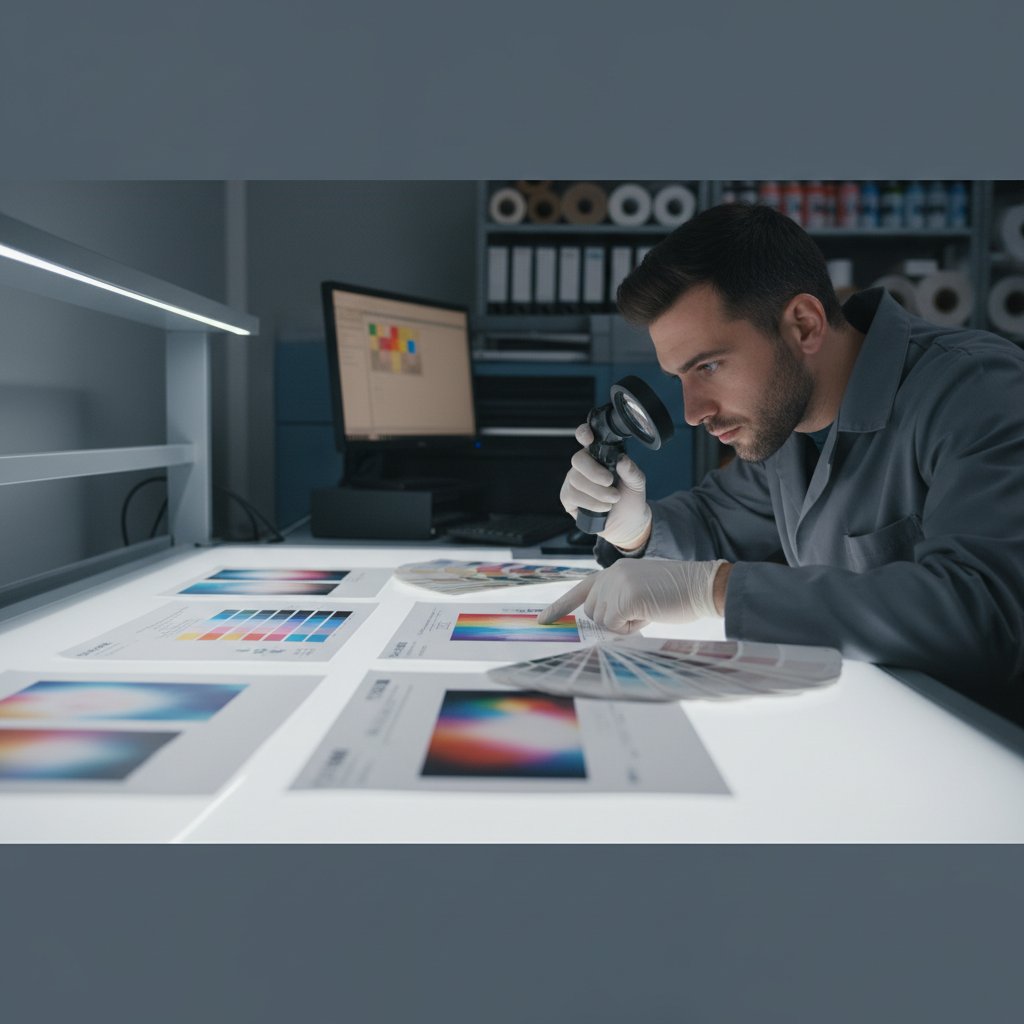
Digital proofs lie. Colors shift. Finishes disappear. For anything important, pay the $45-$85 for a physical proof. Touch it. Hold it under different lighting. Show it to three people who'll be brutally honest.
This single step prevents roughly 80% of "that's not what I expected" disasters.
Step 3: Build in 40% More Time Than Quoted
Print shop says two weeks? Plan for three. This isn't pessimism—it's math. Paper suppliers run out of stock. Presses break down. Your proof needs another round of revisions because you realized the QR code goes to last year's website.
Rush fees typically add 25-50% to your cost. Padding your timeline saves money.
Step 4: Get the File Specs in Writing
Before your designer starts working, get the printer's specification sheet: bleed requirements (usually 0.125"), color mode (CMYK, not RGB), resolution (300 DPI minimum), accepted file formats, font handling, and how they want spot colors specified.
One spec sheet prevents 15 back-and-forth emails.
Step 5: Schedule a Mid-Project Check-In
Halfway to your deadline, verify the job is actually in production. Not "scheduled"—in production. Ask what date it hits the press. When does it go to bindery? When does it ship?
This catches delays while you still have options.
Your Project Insurance Policy
Want to virtually guarantee success? Do these three things:
First, work with shops that specialize in your type of project. The place that prints 50,000 brochures weekly might be terrible at wedding invitations. Their equipment, workflow, and expertise point different directions.
Second, keep a paper sample library. Whenever you see printed work you love, ask what stock it's on. Build a file folder of actual paper samples with notes. "This—exactly this" is powerful.
Third, pay the real price. A 500-piece custom invitation job legitimately costs $800-$2,200 depending on specs. Quotes under $400 mean something's getting sacrificed. Usually your deadline or sanity.
That Boston wedding planner? She's my client now. Her next event's invitations arrived three weeks early, looked exactly like the proof, and cost 15% less than her disaster project because we didn't need rush fees or reprints.
The difference wasn't luck. It was process.